
The Strategic Importance of a True Custom Cosmetic Manufacturer
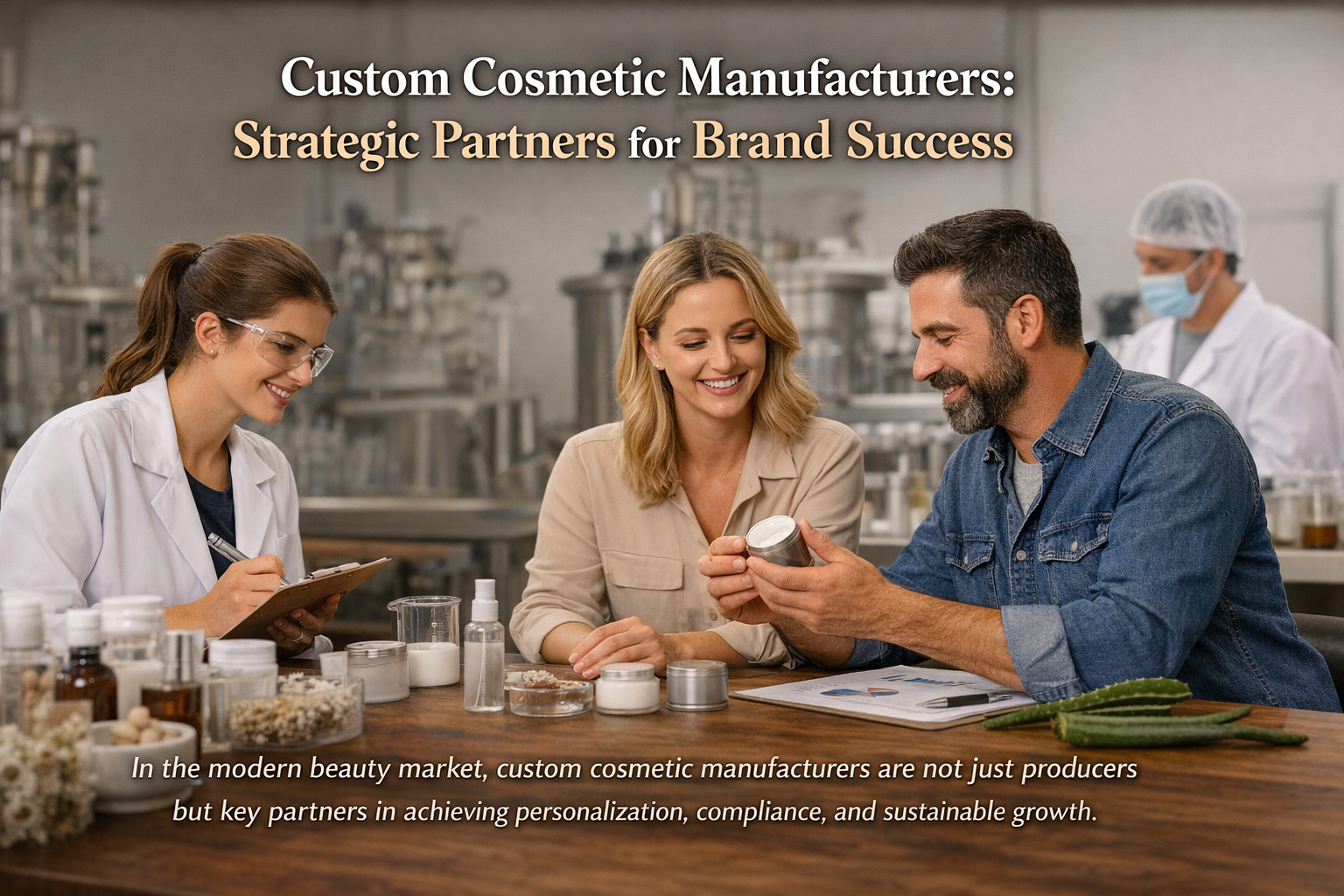
The global shift toward personalization is reshaping the beauty industry. Today’s consumers are no longer satisfied with one-size-fits-all solutions; they demand products tailored to their unique genetic makeup, environmental stressors, and lifestyle preferences . This paradigm shift has elevated the role of the custom cosmetic manufacturer from a mere production house to a strategic partner in innovation.
A capable manufacturer provides the bridge between a brand concept and a tangible, shelf-ready product. However, the term "custom" is often overused. True customization involves more than slapping a label on a generic base; it involves the manipulation of active ingredients, the adjustment of pH levels, the development of unique textures, and the engineering of proprietary delivery systems . Partnering with a manufacturer that possesses deep R&D capabilities allows brands to create a defendable market position through unique formulations that competitors cannot easily replicate.
Decoding the Manufacturing Ecosystem: OEM vs. ODM vs. Private Label
Before entering negotiations, it is vital to understand the distinct service models offered by manufacturers, as each serves a different business goal and budget.
Original Equipment Manufacturer (OEM): True Formulation Ownership
In an OEM partnership, the manufacturer produces a product based on the buyer's unique formula and specifications. This is the deepest level of customization. The brand typically owns the intellectual property (the formula) and works with the manufacturer's technical team to scale it from a lab sample to mass production. This requires the manufacturer to have a robust in-house R&D team and advanced laboratory equipment to handle novel ingredients and complex emulsion systems .
Original Design Manufacturer (ODM): Speed and Market Adaptation
ODM is often the preferred route for brands looking to launch quickly or test a market. Here, the manufacturer presents "ready-made" formulas or product concepts that the brand can then modify—changing colors, scents, or active ingredients. The manufacturer handles the design and formulation, while the brand provides branding and packaging direction. This model leverages the manufacturer's market insights and existing technical stack to reduce development time significantly .
Private Label: The Fastest Path to Market
Private labeling involves taking an existing, fully developed product and branding it as your own. There is no formulation work involved. This model is ideal for high-volume, commoditized products like basic lip glosses or single-shade eyeshadows. While the barriers to entry are low, so is the potential for differentiation .
Critical Evaluation Criteria for Supplier Selection
Selecting a manufacturer based solely on price or minimum order quantity (MOQ) is a common pitfall. A strategic evaluation requires a forensic look at their operations.
Technical Proficiency and R&D Infrastructure
The complexity of your desired product dictates the level of technical skill required from your manufacturer. For a brand developing a stabilized Vitamin C serum or a hybrid skincare-makeup product, the manufacturer must demonstrate specific capabilities.
Inquire about their "technology stack." Do they have high-shear vacuum emulsifiers for creating smooth, stable creams? Can they handle anhydrous systems for balms? Do they have explosion-proof motors for alcohol-based products like perfumes or toners? A manufacturer with advanced equipment, such as carbon steel mixing tanks for high-viscosity pastes, indicates a capability to handle complex formulations that standard factories cannot . Furthermore, look for facilities with cleanrooms that meet GMPC or ISO 22716 standards, ensuring that the product is made in a contaminant-free environment .
Supply Chain Integration and Sourcing Power
A manufacturer's ability to source rare, high-quality, or sustainable ingredients is a significant competitive advantage. Top-tier custom cosmetic manufacturers have established relationships with global suppliers of raw materials, ensuring both quality and consistency .
Ask about their procurement process. Do they have a dedicated team for qualifying raw material suppliers? Can they trace ingredients back to their origin? This is particularly crucial for brands making organic or "clean" beauty claims, where verifying the supply chain is non-negotiable . Proximity to packaging suppliers is another logistical advantage; manufacturers integrated into industrial hubs like Guangzhou or Shenzhen can drastically reduce lead times for components like bottles, pumps, and closures .
The Anatomy of Customization: From Concept to Compound
The journey from a concept to a batch is intricate. Understanding this workflow helps set realistic timelines and budgets.
Phase 1: The Brief and Feasibility Study
Everything begins with a comprehensive creative brief. This document outlines the product type, target demographic, desired benefits (e.g., "24-hour hydration," "mattifying finish"), and preferred sensory elements like texture and fragrance. Upon receiving this brief, the manufacturer's chemists conduct a feasibility study. They assess whether the requested benefits are achievable with current technology and suggest alternative routes if necessary. This phase often includes a review of the regulatory landscape to ensure desired claims (like "SPF 50" or "anti-aging") can be supported by the formulation .
Phase 2: Prototyping and the Stability Gauntlet
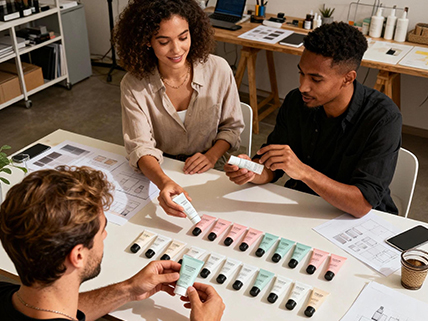
Once feasibility is confirmed, the lab creates prototypes. This is rarely a one-shot process; it often involves multiple iterations to get the texture, color, and scent exactly right. For color cosmetics, this involves precise pigment matching, often using Pantone references or physical swatches .
Once the aesthetic prototype is approved, it enters stability testing. This is a non-negotiable scientific process where samples are subjected to extreme temperatures (freeze-thaw cycles), light exposure, and centrifugal force to ensure the emulsion does not separate, the preservatives work, and the active ingredients remain potent over time. A reputable custom cosmetic manufacturer will never skip this step, as it guarantees the product that reaches the consumer is safe and effective .
Navigating Compliance and Regulatory Affairs
In the beauty industry, regulatory missteps can be fatal. A professional custom cosmetic manufacturer acts as a guide through this complex landscape.
International Certification and Documentation
For brands targeting global markets, compliance is multifaceted. A manufacturer should be well-versed in the requirements of different regions. For the European market, this means adherence to EC 1223/2009 and the ability to provide data for the Cosmetic Products Notification Portal (CPNP). For the US market, they should understand FDA labeling requirements and Voluntary Cosmetic Registration Program (VCRP) protocols .
They must provide batch-specific Certificates of Analysis (CoA) that confirm the product is free from microbial contamination and harmful levels of heavy metals. They should also supply the International Nomenclature of Cosmetic Ingredients (INCI) list, which is mandatory for product labeling worldwide . A manufacturer that proactively offers these documents demonstrates a high level of organizational maturity.
Cost Engineering and Scalability
Understanding the financial mechanics of production is essential for profitable growth. The initial price per unit is just one part of the equation.
The Economics of Minimum Order Quantities
MOQs are often the biggest hurdle for startups. Fortunately, the rise of micro-batching has democratized access to high-quality manufacturing. Many suppliers now offer MOQs as low as one to five pieces for sampling, and 50 to 500 pieces for initial pilot runs . This allows brands to validate their product in the market without tying up massive amounts of capital in inventory.
However, it is important to understand the trade-off. Low MOQs come with higher per-unit costs due to setup fees, changeover time on the production line, and specialized labor for small batches. As volume scales—typically breaking the 1,000 or 5,000-unit threshold—economies of scale kick in, reducing the cost per unit by 30-60% .
Packaging: The Silent Cost Driver
Packaging often accounts for a significant portion of the total product cost and lead time. Custom molds for bottles or compacts require tooling fees and extend development time by weeks. Savvy brands often balance custom formulations with "stock" packaging that features custom decoration—like foil stamping, silk-screening, or custom labels—to create a bespoke look without the high cost of custom tooling .
Emerging Trends in Custom Cosmetic Manufacturing
The future of beauty manufacturing is being shaped by technology and sustainability.
AI-Driven Formulation and Hyper-Personalization
Artificial intelligence is beginning to disrupt the formulation process. Advanced manufacturers are utilizing AI to analyze consumer data and skin diagnostics to create hyper-personalized products at scale. This goes beyond simple "dry skin" vs. "oily skin" categories; it involves creating unique batches for individual customers based on real-time skin analysis via apps or proprietary hardware . This trend is pushing custom cosmetic manufacturers to become data science partners as much as chemical producers.
Sustainable and Ethical Production
Sustainability is no longer a niche marketing claim but a core requirement. Brands are demanding, and manufacturers are providing, "green" formulations that are biodegradable, vegan, and free from contentious chemicals. On the packaging side, there is a surge in demand for mono-material solutions (like the all-paper glue-free boxes) that are easily recyclable, and for refillable systems that reduce waste . A forward-thinking manufacturer invests in these capabilities, allowing brands to authentically market their environmental stewardship.
Conclusion: Building a Partnership, Not Just a Transaction
Selecting a custom cosmetic manufacturer is a strategic decision that impacts everything from your brand's agility and product quality to its regulatory compliance and profitability. The ideal partner is one that aligns with your brand's specific stage of growth and long-term vision.
For a startup, the priority may be a manufacturer offering low MOQs and rapid prototyping, allowing for market testing and agile iteration . For a scaling brand, the focus shifts to a partner with robust quality control, deep R&D for line extensions, and the capacity to handle bulk orders reliably .
By moving beyond a superficial price comparison and diving deep into a potential partner's technical capabilities, compliance infrastructure, and supply chain integration, you position your brand for sustainable success. In the modern beauty landscape, your manufacturer is your greatest ally—choose one that empowers you to innovate, comply, and scale.
Related_News
-

Sing Foo Participated in the 2025 Shanghai Beauty Expo
-
New GMP-Certified Production Line Officially Launched
-
New Product Series for Global Market
-
Skincare Manufacturer: How SINGFOO Masters the Art of Cosmetic Innovation
-
Cosmetic Manufacturer: SINGFOO – Where Vision Meets Precision in Beauty Manufacturing

SUBSCRIBE
IF YOU REQUIRE THE MOST SUITABLE PRODUCTS, FEEL FREE TO CONTACT US.
INQUIRY